
Your students are hiding their leadership from you.
The classroom rewards compliance. Sitting still, raising hands, finishing on time. Those are performance behaviors, not leadership behaviors. Put five to six students on a starship bridge with a mission going wrong, and you will finally see who steps up. We bring the bridge, and we bring the evidence.
“Our mission was easily the most engaged my students had been all school year. The students who normally sat quietly in the corner took a leadership role and commanded their ship. My high achievers, special education, and on-level students were all working together towards a common goal.”
— T. Ray, 7th Grade Math, JSTEM Academy
What is a school mission day?
A school mission day is a mobile starship bridge simulation delivered on your campus for grades 5 to 12. Students fly live missions in crews of five to six while the Mission Analysis System records role labeled communication and coordination, and your staff receives crew performance reports with a teacher debrief pack after the visit. Mission days are commonly funded through Title IV Part A, Perkins V, foundation grants, and local STEM budgets.
When your board asks if leadership is working, what data do you show them?
Texas districts invest heavily in Leader in Me, SEL curricula, and character development goals written into district improvement plans. Those programs promise collaboration, communication, and proactivity. None of them produce behavioral evidence.
Self report surveys measure what students think they do. Teacher observation cannot scale to every interaction. Written tests cannot capture how a student behaves under pressure. So when reviews, funders, and boards ask for evidence, programs default to anecdote.
You bought the program. We produce the data.
Mobile Space Adventures is not another curriculum competing for your enrichment budget. It is the measurement layer that shows whether the curriculum you already chose is doing what it promised, in your students' own words and decisions.
You think you know who your leaders are. You are probably wrong about three of them.
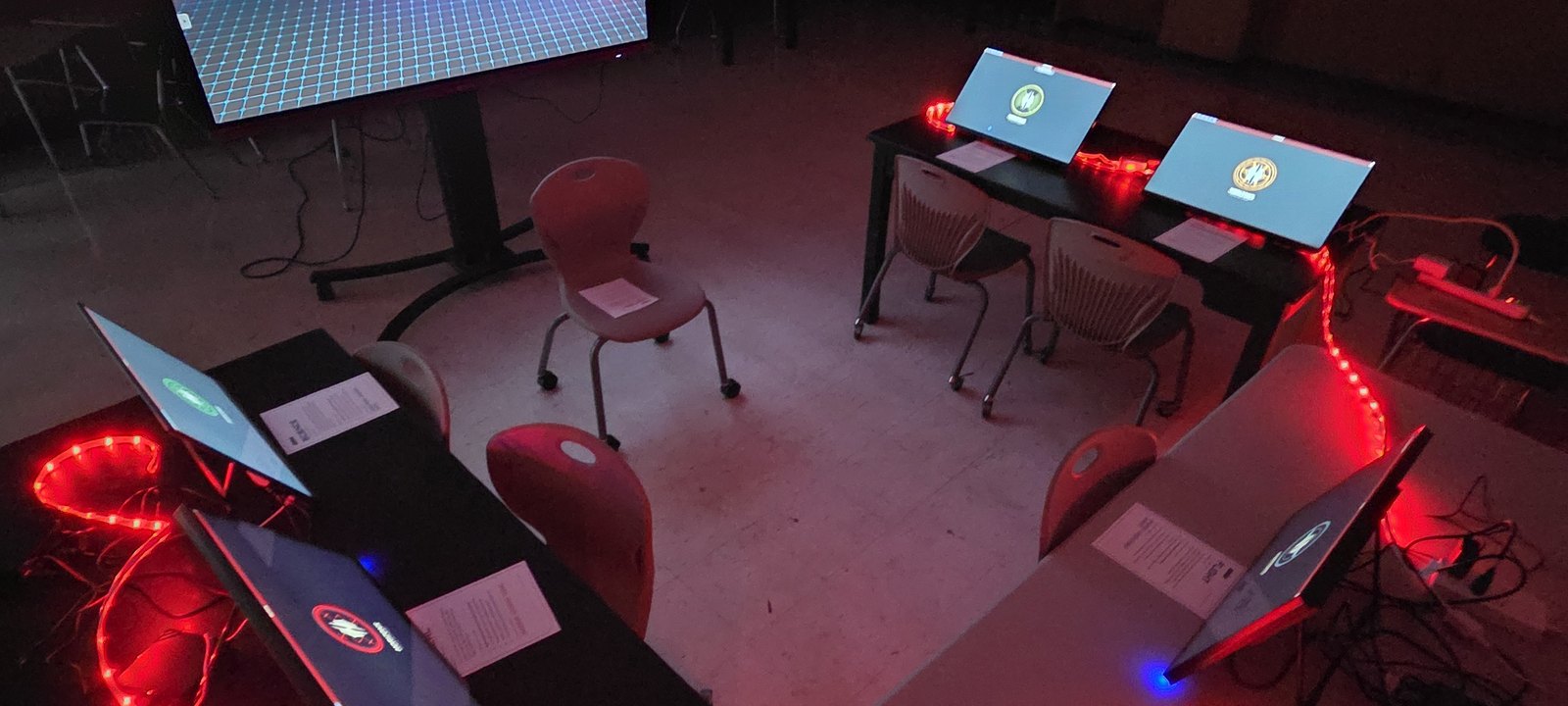
A starship bridge arrives at your school. Five to six students walk in and take crew stations. Captain. Helm. Science. Engineering. Communications. Operations.
For 30 to 90 minutes they run a live mission while the Mission Analysis System listens to the crew's voice traffic and pairs it with mission telemetry. Every command. Every hesitation. Every moment one student steps up or another goes quiet.
After mission day, your team receives a crew performance report. Role labeled behavioral evidence, written in plain language, drawn from what your students actually said and did. Now you know what to coach, and which quiet student has been leading all along.
Science flagged the anomaly twice before anyone acknowledged it. When the Captain finally repeated the report back, the crew reorganized around the new plan in seconds. The student your roster lists as the quietest in the room was the first to see the problem and the most persistent about raising it.
CONFIDENCE: HIGH // ROLE-LABELED TRANSCRIPT + TELEMETRY
Illustrative excerpt from a composite mission. Your report reflects your crews' actual transcripts and telemetry.
One day. No buses. Evidence on every crew.
We come to your campus
The bridge, consoles, lighting, sound, and the Mission Analysis System arrive at your school. Setup takes about 45 minutes in a standard classroom or flex space. We work around STAAR windows, bell schedules, and campus events.
Students run real missions
Five to six per crew with a structured pre brief and defined stations. The scenario adapts to crew decisions, so there is no script to memorize and no way to fake it. A full mission day puts up to 50 students through a single bridge, up to 100 with two.
Your team gets the evidence
Role labeled crew performance reports in plain language, plus a teacher debrief pack for classroom follow-on and a leader brief for board and funder conversations. Premium engagements add a qualitative narrative for every student.
You do not have to take our word for what happens on the bridge. Read the mission file.
Every mission publishes its scenario, its crew stations, its run time, its prerequisites, and its TEKS crosswalk before you commit a day to it. Your instructional team can decide whether it fits the calendar without scheduling a single meeting.
The Meridian Rescue
Grades 6 to 8 // 30 minutes // no prerequisite
A civilian transport carrying 200 colonists comes under attack, and your students have to intercept, protect, and rescue before time runs out. Twenty TEKS Student Expectations across ELA, science, mathematics, and technology applications, the broadest middle school coverage in our catalog.
Open the Mission FileIntolerance: Liberation and Diplomacy
Grades 11 to 12 // 90 minutes // AP Physics capstone
An asteroid hits Mars in 72 hours. The crew passes a four question physics certification exam on impulse, momentum, energy, and center of mass, then executes the deflection. This is not a game dressed up as physics. The physics is the mission.
Open the Mission FileBoth missions run on the same bridge with the same instrumentation, so one campus day can mix them. Compare them side by side.
Reports built for the people who will actually read them.
For classroom teachers
Crew by crew communication and coordination patterns, the moments worth replaying with your class, and discussion prompts that turn mission evidence into classroom follow-on. Built for instructional planning, not for filing.
Mission reports can also serve as potential supporting evidence under your district's TIA local designation track, subject to district approval.
For principals and district leaders
What the day produced, how many students flew, the patterns that showed up across crews, and program alignment language you can carry into board and funder conversations without translation.
We tell you what we observed, what we did not, and how confident we are in every claim. That candor is why the report survives skeptical readers.
All processing happens locally on our equipment inside your building. No student audio, video, or transcript data leaves your campus. The consent packet covers capture, retention, deletion, and who controls the data. No PII is retained after reports are delivered.
Alignment language for the frameworks you already use.
Texas TEKS
Mapped to specific Student Expectations across Math, Science, ELA Oral Language, and Technology Applications. Every mission template publishes its TEKS map before deployment, so your instructional team sees the alignment up front.
Leader in Me habits
For districts that run Leader in Me, mission evidence lines up with four of the seven habits. Decision behavior and adaptive response to Habit 1. Planning behavior to Habit 2. Communication clarity to Habit 5. Team coordination to Habit 6. We do not map Habits 3, 4, or 7.
CASEL competencies
Relationship skills, responsible decision making, and self management show up as observable crew behavior, which gives your SEL program evidence that does not depend on self report.
Bloom's Taxonomy
Missions are designed to push students past Remember and Understand into Apply, Analyze, Evaluate, and Create. Bloom's cognitive levels ground how we build a scenario, not how we score one.
Crew Resource Management
Our behavioral markers draw on the Crew Resource Management tradition and the Salas Big Five teamwork model, the approach aviation has refined for more than 40 years to evaluate crews that cannot afford to fail.
Texas Scientific and Engineering Practices
The recurring practices your science teachers already teach show up as crew work. Asking questions, planning and carrying out investigations, analyzing data, and communicating a conclusion to a crew that has to act on it.
Alignment references describe how mission evidence maps to these frameworks. They are not endorsements by the framework owners.
Your business office has seen this before.
Mission days fit funding streams your district already manages, and most engagements sit below typical bid thresholds, purchasing under local district policy. Two federal titles do most of the work. One covers your students. The other covers your teachers and administrators.
Title IV, Part A. For students.
Student Support and Academic Enrichment grants fund well rounded opportunities, including STEM, and programs that support safe and healthy students. Student mission days speak to both priorities, and the crew performance reports give your Title IV narrative the evidence piece enrichment purchases rarely produce.
Title II, Part A. For teachers and administrators.
Supporting Effective Instruction funds professional development for teachers, principals, and other school leaders. Put your campus leadership team on the bridge and the debrief becomes leadership development grounded in their own transcript. More than 50 master STEM educators flew our missions at the 2026 LiftOff institute.
Perkins V. For CTE programs.
Career and technical education programs use mission days as observable evidence of employability skills. Communication, coordination, and decision making under pressure, documented crew by crew.
Foundation and local funds.
Education foundation grants, campus activity funds, and local STEM enrichment budgets cover single campus days without touching a federal application at all.
Districts can also move money between Title II and Title IV under ESSA transferability, so the right bucket is often a short conversation with your federal programs office, who makes the final call on allowability. We provide funding pathway documentation and write the alignment language so your grant narrative does not start from a blank page.
Three shapes. Pick the one that fits your campus.
Single Bridge Campus Day
Custom quote
One bridge, one mission day
- Up to 50 students across a full mission day
- Role labeled crew performance reports
- Teacher debrief pack and leader brief
- Standard and Premium tiers add measurement depth, including per-student qualitative narratives at Premium
Two Bridge Campus Day
Custom quote
Two bridges, two operators
- Up to 100 students in a single day
- Both bridges instrumented by the Mission Analysis System
- Ideal for whole grade levels and campus events
- Standard and Premium tiers available
Multi-Day Engagement
Custom quote
Multi day engagement
- 300 to 500 students across an engagement
- Longitudinal patterns across your cohorts
- Five day and launch-plus-support shapes available
- Built for district and multi campus programs
Compared for procurement purposes, mission days sit above mobile planetarium visits, which measure nothing, and far below annual leadership curriculum licenses. You are funding measurement, not another field trip.
The educators who need evidence, not anecdotes.
Counselors & SEL coordinators
Observable behavioral evidence that does not rely on teacher opinion or student self report.
CTE & career readiness teachers
Evidence that your students can perform leadership skills under pressure, strengthening your program's outcome story.
Gifted & advanced academics coordinators
See what happens when your strongest academic students have to lead in an ambiguous situation with no rubric to satisfy.
Administrators planning enrichment days
A full mission day cycles up to 50 students through each bridge, and every crew leaves evidence behind.
Answers your business office will want.
Is student data stored?
No recordings are retained and no PII is stored after reports are delivered. All processing happens locally on our equipment inside your building. The consent packet covers capture, retention, deletion, and who controls the data.
How many students can fly in one visit?
A single bridge day serves up to 50 students. A two bridge day serves up to 100. A multi day engagement serves 300 to 500 across a week.
What does a teacher actually receive?
A role labeled crew performance report per crew in plain language, plus a debrief pack with discussion prompts for classroom follow-on. Premium engagements add a qualitative narrative for every student, with confidence flags on every claim.
Can we use federal or grant funds?
Student mission days fit Title IV Part A student support and academic enrichment purposes. Educator and campus leadership days fit Title II Part A professional development purposes. Perkins V, foundation grants, and local STEM budgets cover the rest. We provide funding pathway documentation for your business office, and your federal programs office makes the final call on allowability.
How much space do you need, and how long is setup?
A 40 by 40 foot indoor area works well. A gymnasium, cafeteria, or large classroom is typical. We bring the full simulator and handle installation, which takes about 45 minutes. We work around STAAR windows, bell schedules, and campus events.
How far in advance should we book?
Two to four weeks minimum. Popular dates fill early, particularly end of semester and STEM week, so book earlier if you have a target date in mind.
What if a student has accommodations?
We can adjust for most needs. Let us know in advance about mobility, hearing, vision, or sensory considerations and we will work with you to make sure every student who wants a station gets one.
What is the cancellation policy?
Reschedule free with 48 hours notice. A $100 reservation fee applies to cancellations inside 24 hours.
Session counts, report turnaround, grading guidance, teacher prep, and service area are all answered in the full Before You Book FAQ. It is written to be forwarded to your business office.
Fall mission calendars fill by campus, not by district.
Claim your date.
Prefer to talk first? Email [email protected]